Departamento de Conservación y Recreación (DCR)
 Conservar. Proteger. Disfrutar.
Departamento de Conservación y Recreación (DCR) 


When repeated efforts to find a rare species come up empty, the Virginia Natural Heritage Program will declare it “extirpated,” or locally extinct.
But even when a species has not been spotted in decades, biologists may consider it "historic" in the state. Hope remains that despite the lack of modern observations, it still lives, undetected.
Botanists in the program have redoubled their efforts to search for such plants that have remained elusive for years and made some exciting re-discoveries, along with other new discoveries.
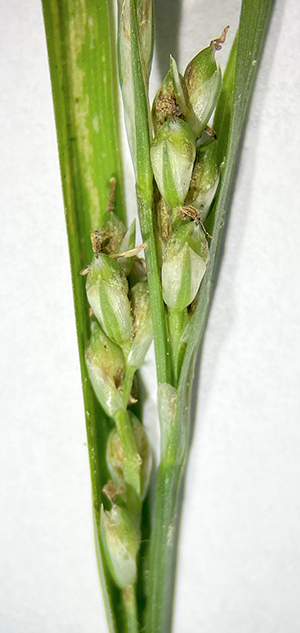
Senior botanist Johnny Townsend and staff botanist Gemma Milly rediscovered necklace spike sedge (Carex ormostachya) in the only known site in Virginia, which hadn’t been observed in the state in 35 years.
First found in the state in 1937, it was not seen again until 1990. Despite multiple efforts to search for it, it was not documented again until 2025, when Milly found a handful of plants at Elliot Knob in Augusta County.
Describing it as difficult to spot, Townsend said, “It’s kind of a miracle it got found again.”

Field botanist Jennifer Stanley discovered a very small population of the globally rare cream flowered tick-trefoil (Desmodium ochroleucum) in a weedy, disturbed, threatened habitat.
After having not been observed in Virginia in nearly 50 years, the legume was rediscovered in 2017. A second population was documented in 2023.
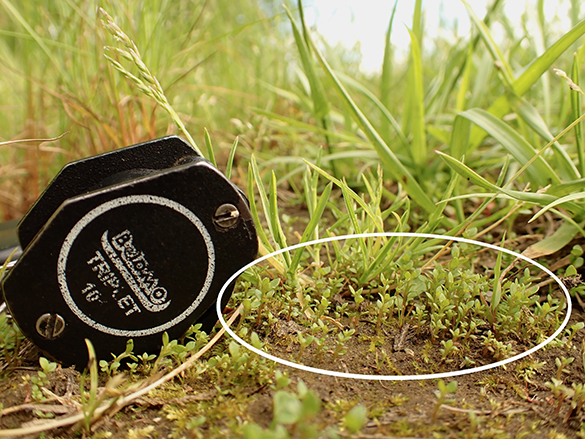
Milly rediscovered a tiny flowering plant, chaffweed (Centunculus minimus), documented for only the third time in Virginia, in Augusta County. This species, which reaches 1 to 10 centimeters in height, is critically imperiled in Virginia and considered rare or historic in 16 other North American states or provinces. First spotted in 1886, it was not seen again until 2022.
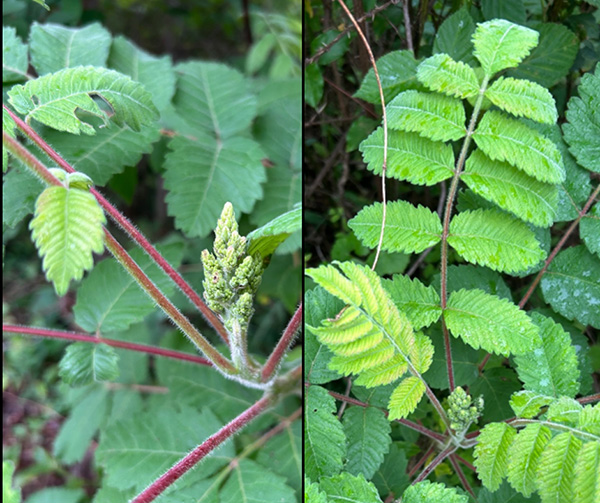
Stanley discovered the federally endangered Michaux’s sumac (Rhus michauxii) shrub in a new location in Brunswick County. It was the first new population documented in more than a decade.
Found in open woodlands and savannas disturbed by frequent fire, the small densely hairy shrub is native to the southeastern Piedmont and Coastal Plain.
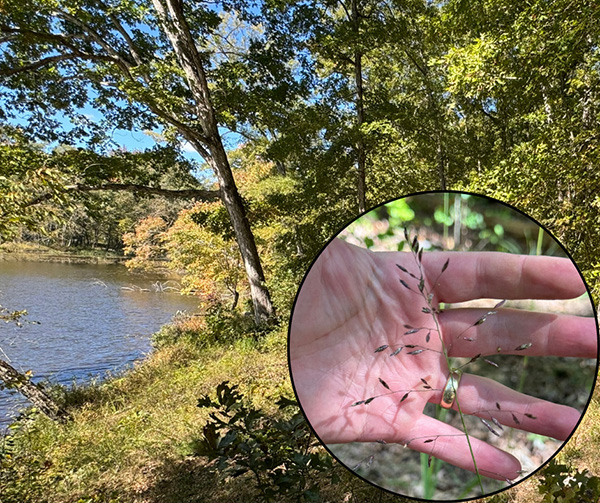
Vegetation ecologist Joey Thompson discovered a new population of a rare grass species, Chapman’s purpletop (Tridens chapmanii), in a well-preserved section of woodland along Swift Creek Lake at Pocahontas State Park in Chesterfield County.
Chapman’s purpletop, known only from two other locations in the state, is considered globally rare and critically imperiled in Virginia.
The discovery was made as part of an ecosystem mapping project for Virginia State Parks. Both Natural Heritage and Virginia State Parks are part of the Department of Conservation and Recreation.
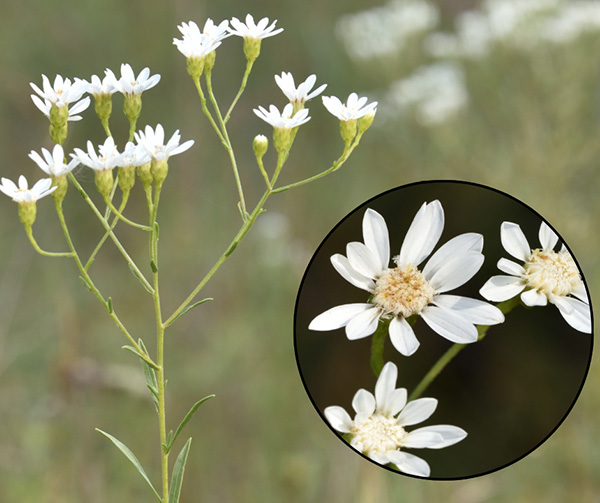
Stanley also discovered a new state record for white prairie goldenrod (Solidago ptarmicoides) in Dinwiddie County.
The main native range of this species is in the Midwest and has otherwise not been found in the mid-Atlantic region. It is ranked critically imperiled in Virginia. This is a regionally significant find which will be included in an upcoming publication authored by a cohort of Southeastern botanists.
Categorías
Conservación | Plantas nativas | Patrimonio natural | Naturaleza | Parques estatales
Etiquetas
ecosistema | Plantas autóctonas | Parques estatales